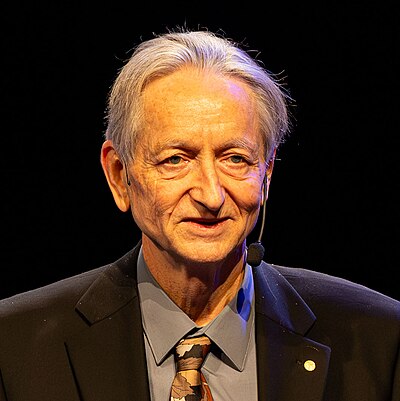
Albert Einstein Google Scholar: h-index, Total Citations, and Citation Map
Albert Einstein's h-index is 132 (384 i10-index, 200,854+ total citations across 1,000+ publications) according to Google Scholar as of September 2026. Albert Einstein is affiliated with Institute of Advanced Studies, Princeton.
Albert Einstein is a researcher affiliated with Institute of Advanced Studies, Princeton, specializing in Physics. Their work has been cited 200,854 times. This profile visualizes their global influence, highlighting strong citation networks in United States.
Albert Einstein's Citation Metrics
Bibliometric impact based on 1,000 indexed publications.
- H-Index
- 132
- i10-Index
- 384
- Total Citations
- 200,854
- Citing Countries
- 75
As of September 2026.
Albert Einstein has an h-index of 132 and 200,854 total citations across 1000 publications, with research cited by institutions in 75 countries.
Download Exports (PNG, CSV, Poster)
Free Viewing Albert Einstein's citation map is always free. Pay once to download poster, PNG, and CSV files for offline use or your visa packet.
Global Impact Map
Visualizing the geographic distribution of institutions that have cited your work.
Starting…
Pins will appear here as institutions are resolved — no need to refresh.
Can quantum-mechanical description of physical reality be considered complete?
193528,671
Top Citing Countries
Top Citing Institutions
Visa Evidence Package
Views and exports tuned for EB-1A, O-1A, and EB-2 NIW petitions. Sustained acclaim, geographic reach, and independent-citation filtering are the strongest evidence categories immigration adjudicators look for.
Significant Contributions
Auto-detected research lines — a seminal paper and the follow-up work building on it. Review and edit before using in a petition. Each Free PDF opens in a new tab — EB-1A organises this into the structure USCIS applies to Criterion 5 of 8 CFR § 204.5(h)(3)(v); EB-1B re-frames it under § 204.5(i)(3) (outstanding researcher); NIW presents it under prong 2 of Matter of Dhanasar.
1156 citing papers could not be classified (no author data) — excluded from the percentages above.
The researcher established a foundational molecular-kinetic framework for particle motion in stationary liquids, a theory subsequently formalized in statistical mechanics and Brownian motion studies.
The researcher established a foundational heuristic framework for understanding the emission and transformation of light, a seminal contribution that has been widely adopted by the scientific community.
The researcher established a novel method for determining molecular dimensions, a foundational contribution evidenced by its extensive independent citation record.
Citation trend (last 10 years)Click to expand
Citation Trend (Last 10 Years)
Related Guides
Learn how to use citation maps for your research and visa applications.
About Albert Einstein's research
Albert Einstein is a researcher in Physics at Institute of Advanced Studies, Princeton. Their work has been cited 200,854 times across 1,000 publications (h-index 132), according to Google Scholar.
Their most-cited work, “Can quantum-mechanical description of physical reality be considered complete?” (1935), has accumulated 28,671 citations. Other influential works include “Uber einen die Erzeugung und Verwandlung des Lichtes betreffenden heurischen Gesichtpunkt” (1905) with 21,854 citations and “On the movement of small particles suspended in stationary liquids required by the molecular-kinetic theory of heat” (1905) with 20,712 citations.
Citations of Albert Einstein's research come primarily from United States, Germany and United Kingdom, reflecting international research impact across 5+ countries. The interactive citation map above shows the full geographic distribution of the institutions citing this work.