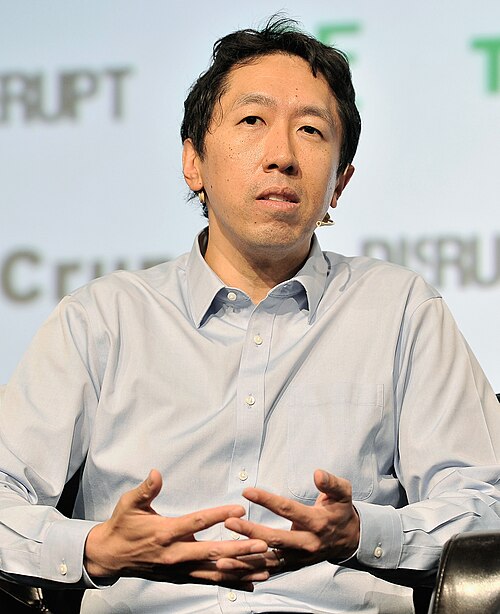
Adams Wei Yu Google Scholar: h-index, Total Citations, and Citation Map
Adams Wei Yu's h-index is 37 (40 i10-index, 48,134+ total citations across 42+ publications) according to Google Scholar as of October 2026. Adams Wei Yu is affiliated with Research Scientist, Google DeepMind.
Adams Wei Yu is a researcher affiliated with Research Scientist, Google DeepMind, specializing in various fields. Their work has been cited 48,134 times. This profile visualizes their global influence, spanning a global audience.
Adams Wei Yu's Citation Metrics
Bibliometric impact based on 42 indexed publications.
- H-Index
- 37
- i10-Index
- 40
- Total Citations
- 48,134
- Citing Countries
- 0
As of October 2026.
Adams Wei Yu has an h-index of 37 and 48,134 total citations across 42 publications, with research cited by institutions in 0 countries.
Download Exports (PNG, CSV, Poster)
Free Viewing Adams Wei Yu's citation map is always free. Pay once to download poster, PNG, and CSV files for offline use or your visa packet.
Showing partial map from open academic databases
Upgrade ($39.98) for the complete Google Scholar crawl.
Global Impact Map
Visualizing the geographic distribution of institutions that have cited your work.
Starting…
Pins will appear here as institutions are resolved — no need to refresh.
Gemini: a family of highly capable multimodal models
202312,005
Top Citing Countries
Top Citing Institutions
No institution data available.
Citation trend (last 10 years)Click to expand
Citation Trend (Last 10 Years)
Related Guides
Learn how to use citation maps for your research and visa applications.
About Adams Wei Yu's research
Adams Wei Yu is a researcher at Research Scientist, Google DeepMind. Their work has been cited 48,134 times across 42 publications (h-index 37), according to Google Scholar.
Their most-cited work, “Gemini: a family of highly capable multimodal models” (2023), has accumulated 12,005 citations. Other influential works include “Scaling instruction-finetuned language models” (2024) with 7,086 citations and “Finetuned language models are zero-shot learners” (2022) with 6,814 citations.